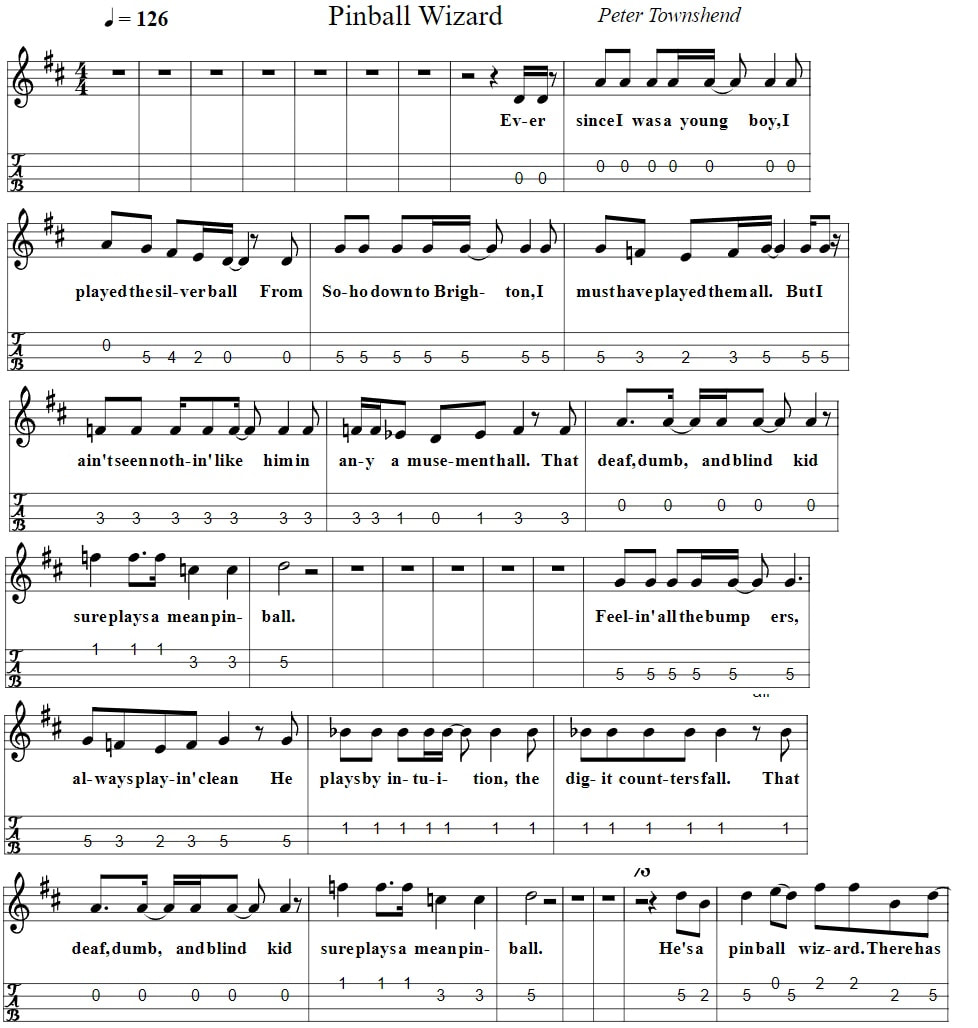
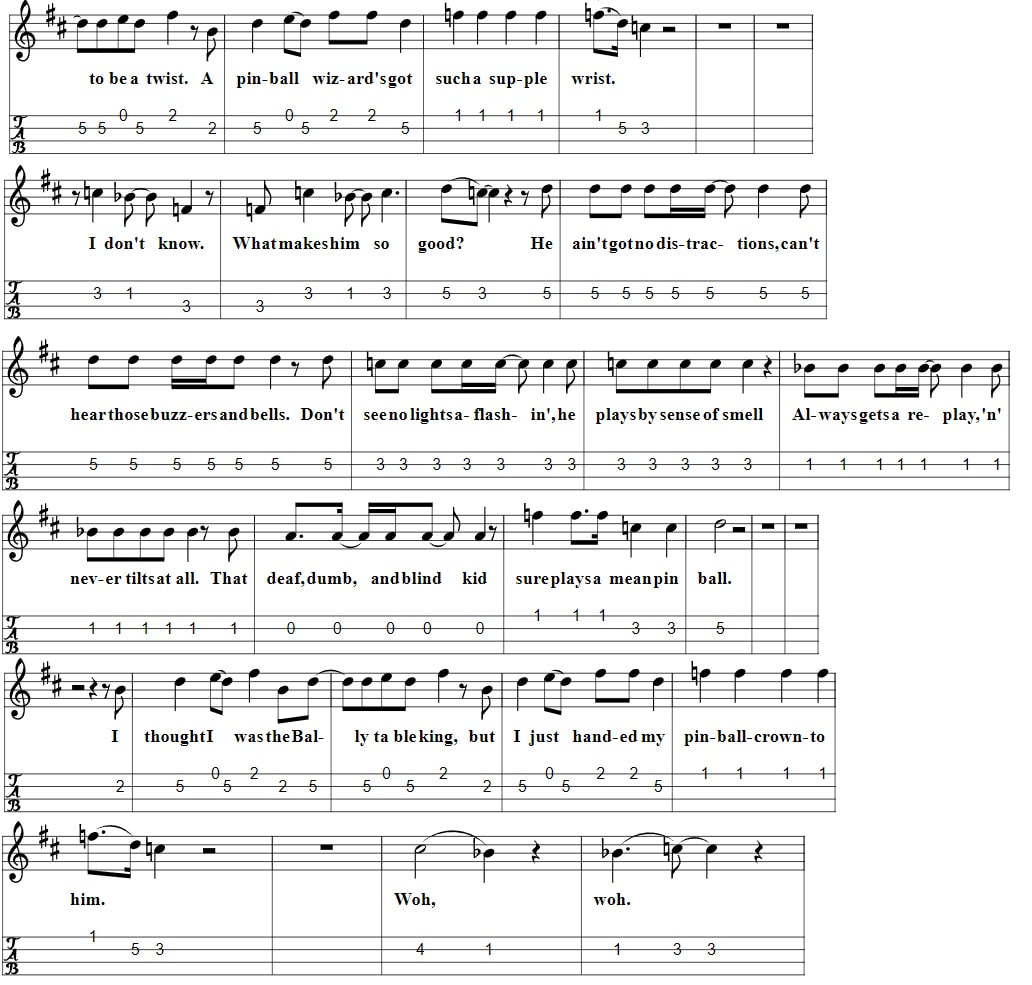
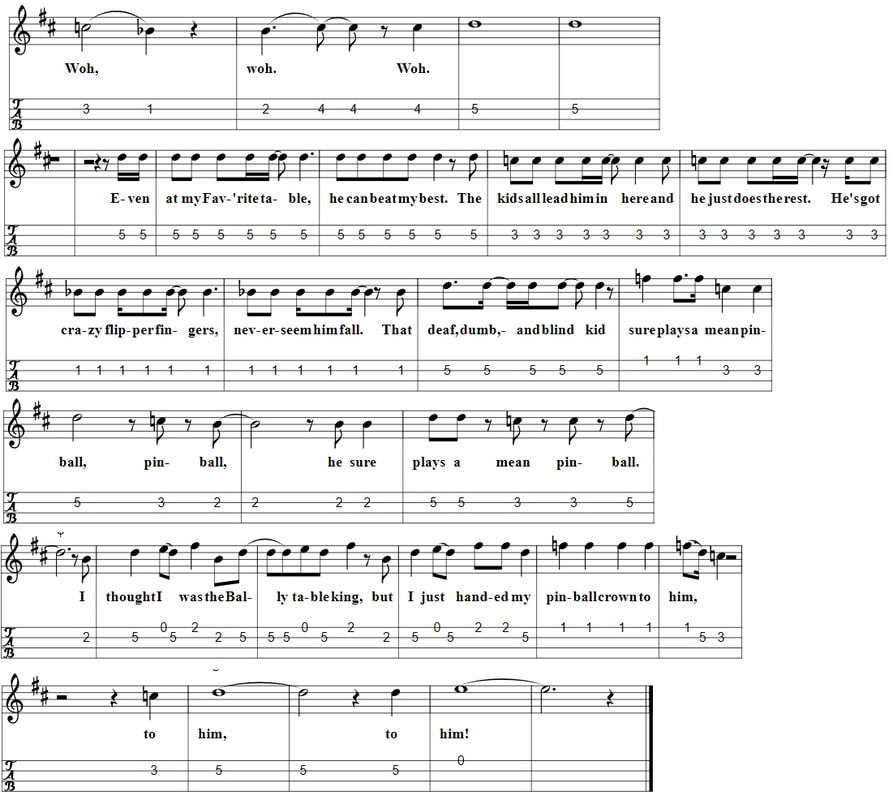
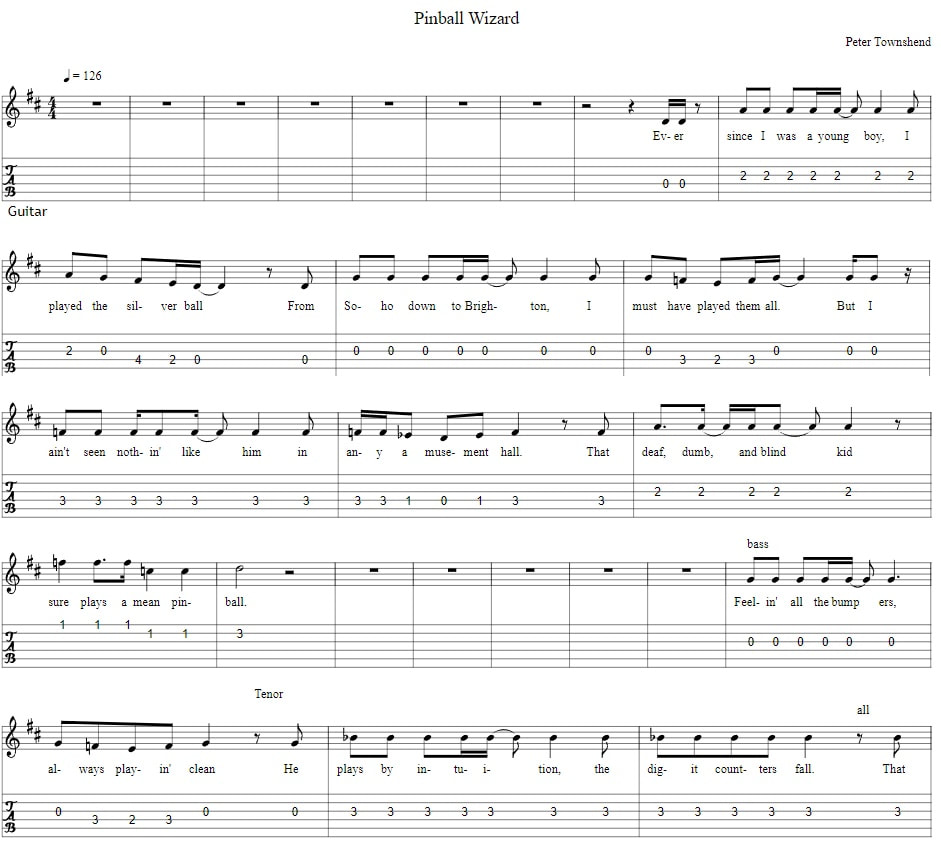
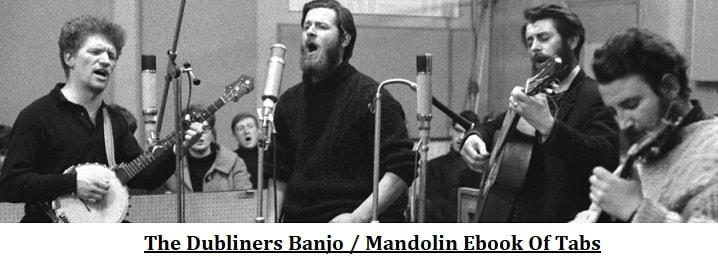
Pinball Wizard Guitar And Mandolin Tabs
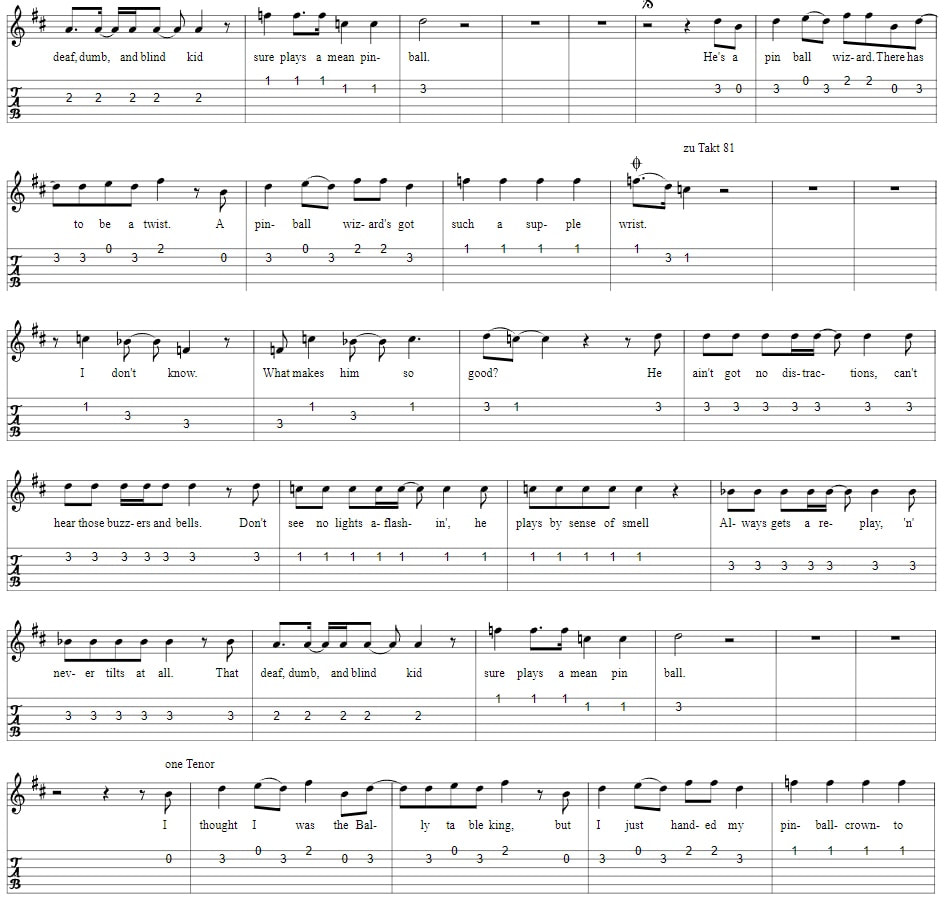
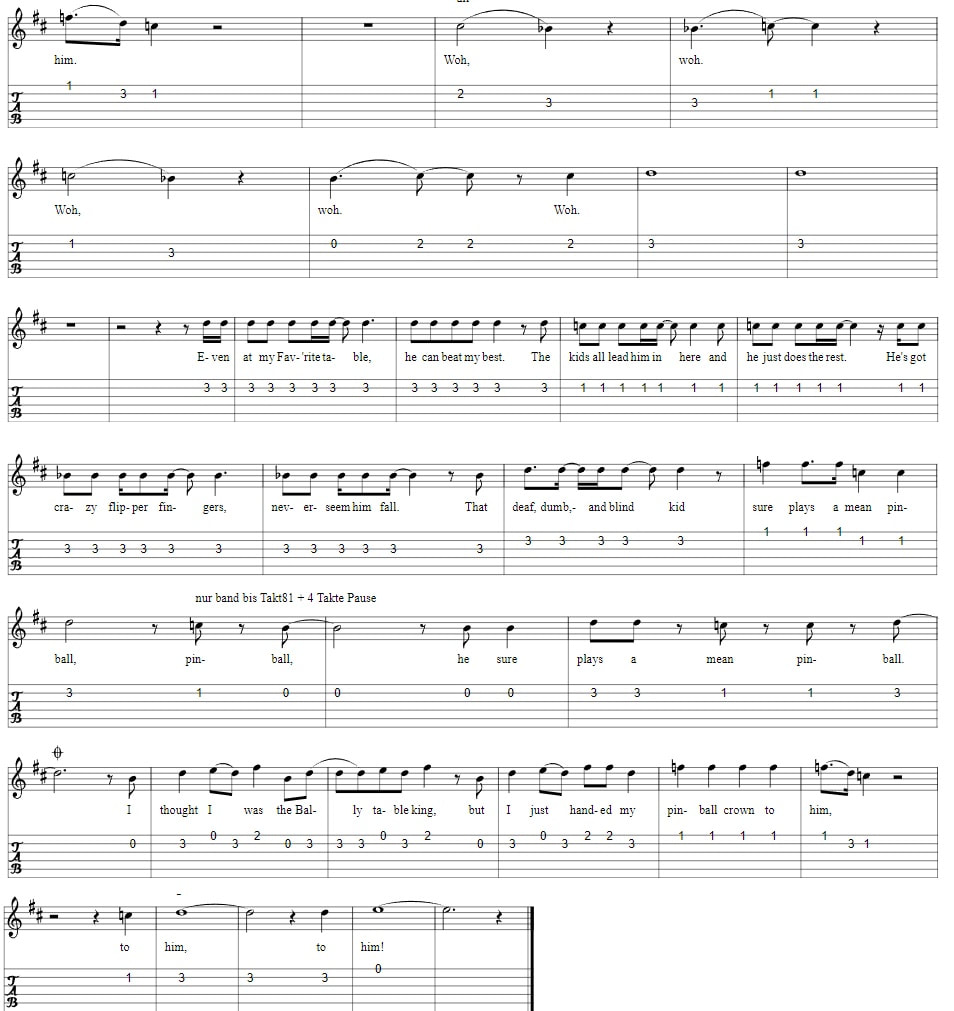
Pinball Wizard Fingerstyle Guitar tab by the who and mandolin / tenor tab first.
The guitar tab
Back to the popular solo guitar tabs .
"Pinball Wizard" by The Who is an iconic song known for its unique and percussive acoustic guitar riff. While the original recording is in the key of A, it can be played in the key of D by transposing the chords.
Here is a guide on how to play "Pinball Wizard" in the key of D.
Chords
The main chord progression of the song uses suspended chords. In the key of D, the primary chords and their suspended variations would be:
Strumming and Rhythm
The key to playing "Pinball Wizard" is the distinct 16th-note strumming pattern that Pete Townshend uses. This requires a fast, steady right-hand motion. The pattern often involves a down-down-up-down-up-down-up strum, with a strong accent on the downbeats.
The main riff often uses a pattern of four downstrokes on a suspended chord, followed by a quick upstroke and downstroke to switch to the major chord, and then a final downstroke on the major chord.
Structure and Chords
The song's structure is fairly straightforward. Here are the chord progressions for each section, transposed to the key of D:
Verse:
Additional Tips
"Pinball Wizard" by The Who is an iconic song known for its unique and percussive acoustic guitar riff. While the original recording is in the key of A, it can be played in the key of D by transposing the chords.
Here is a guide on how to play "Pinball Wizard" in the key of D.
Chords
The main chord progression of the song uses suspended chords. In the key of D, the primary chords and their suspended variations would be:
- D chords: Dsus4 and D
- C chords: Csus4 and C
- B♭ chords: B♭sus4 and B♭
- A chords: Asus4 and A
Strumming and Rhythm
The key to playing "Pinball Wizard" is the distinct 16th-note strumming pattern that Pete Townshend uses. This requires a fast, steady right-hand motion. The pattern often involves a down-down-up-down-up-down-up strum, with a strong accent on the downbeats.
The main riff often uses a pattern of four downstrokes on a suspended chord, followed by a quick upstroke and downstroke to switch to the major chord, and then a final downstroke on the major chord.
Structure and Chords
The song's structure is fairly straightforward. Here are the chord progressions for each section, transposed to the key of D:
Verse:
- Dsus4 D Dsus4 D
- Csus4 C Csus4 C
- B♭sus4 B♭ B♭sus4 B♭
- Asus4 A Asus4 A
- F G D
- F G D
- F G D
- G D
- D C G
- D C G
- Dsus4 D Dsus4 D
- D D C F B♭ (repeat as needed)
Additional Tips
- Capo: An easy way to play the song in the key of D is to place a capo on the 5th fret and play the chords as if you were in the original key of A. This allows you to use the familiar chord shapes while still getting the correct pitch.
- Suspended Chords: Pay close attention to the quick switch between the suspended and major chords. The "sus" chords are a defining part of the song's sound.